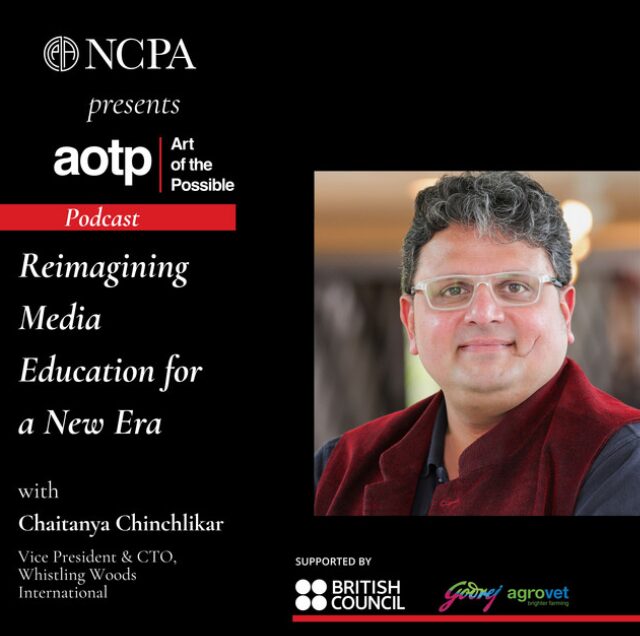
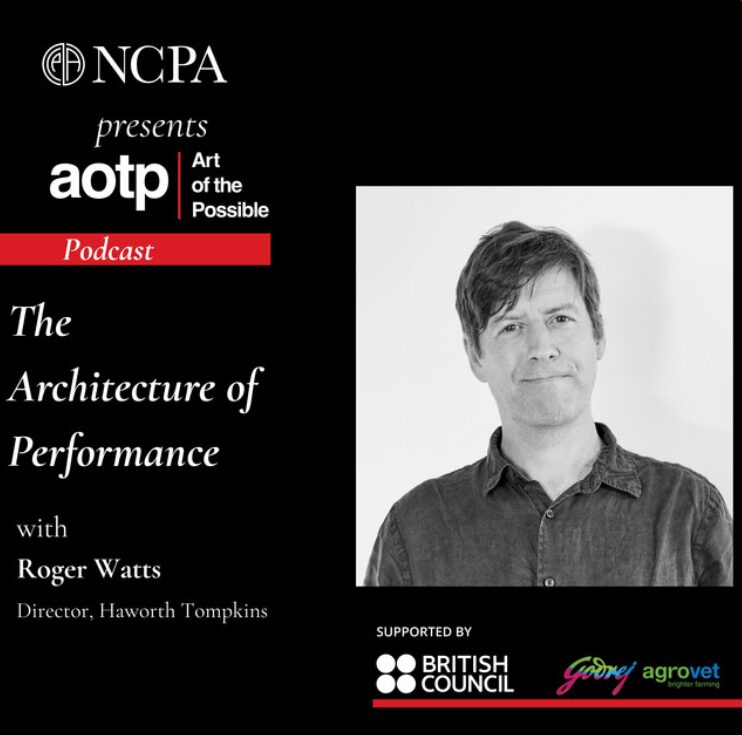
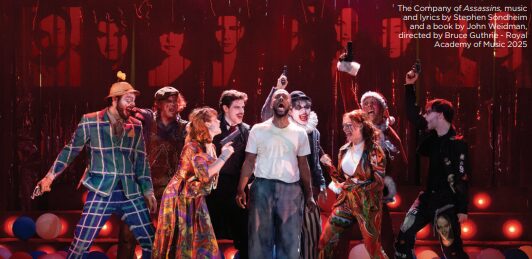
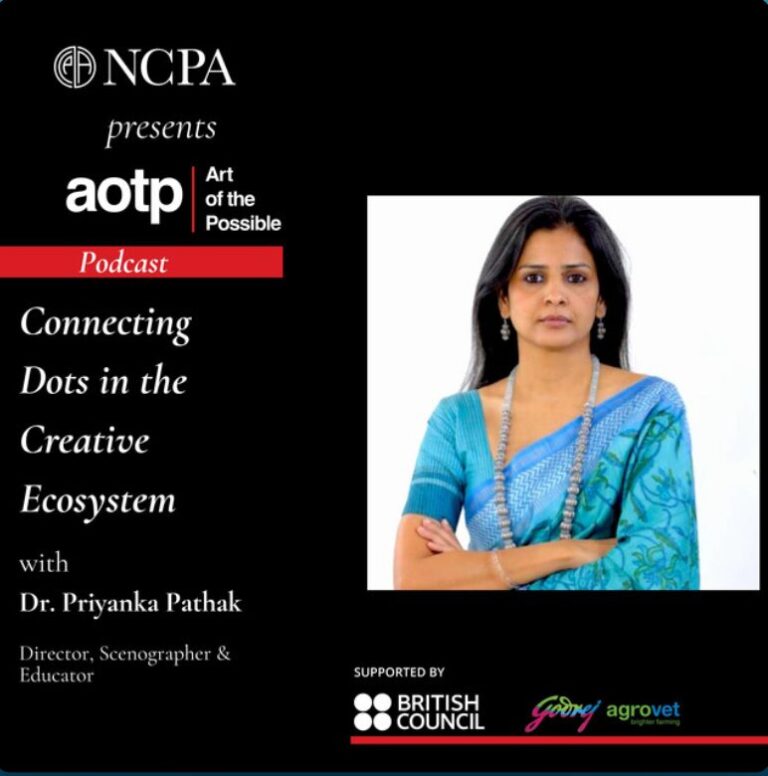
At the AOTP symposium, Yuki moderated a panel focused on reimagining production arts training in India. The discussion brought together speakers from different parts of the ecosystem, each offering a distinct perspective on education and practice.
“We had four speakers from very diverse backgrounds,” says, Yuki Elias.
From formal education and pedagogy to questions of cultural context, access and evolving career pathways, the panel explored what training in India needs to consider today. Conversations ranged from building structured programs to understanding who arts training is really for.
The discussion also emphasized that working in the arts requires more than technical expertise.
“Not just looking at technical skills but also looking at the other core skills that are required… communication skills, deep empathy”, says Elias

A Theatre Landscape in Transition
Reflecting on how theatre has evolved, Yuki Elias points to a noticeable shift in both form and infrastructure.
“I think what’s exciting in the last few years especially is the number of more theatre groups that we have with very different kinds of theatre making style,” says Elias.
The rise of smaller venues in cities like Mumbai has opened up space for experimentation and more frequent performances. “These smaller venues are giving us spaces to experiment,” she adds. Alongside this, there is a move away from relying heavily on Western scripts toward developing new writing rooted in local contexts.
Learning Through Exposure and Conversation
Looking back at her early years, Yuki Elias notes that while structured platforms like AOTP may not have existed in the same way, access to learning came through constant exposure. “We would constantly be going to all kinds of talks… about community, society, politics.” For her, learning was never limited to theatre alone. It was shaped by a broader engagement with ideas and conversations beyond the stage.
Why Spaces Like AOTP Matter
Elias emphasizes the importance of creating spaces where professionals can come together and exchange perspectives. “Any space that’s bringing people together to have conversations, to get to know each other… those diverse perspectives are so key to have,” she says. She also highlights the significance of young audiences and early-career professionals having access to these conversations. “They are looking to build their careers… and they’re having access to that very early,” she says.
Adapting Work Across Scales
Speaking about her solo work Elephant in the Room, Elias explains how some productions are designed to adapt to different spaces. “Elephant has that capacity to be performed as an epic production… and also in very small spaces,” she says. The show has been performed in multiple environments, from banquet halls to larger theatres and even outdoor locations, adjusting its scale each time. “It gives scale where needed and it can come down,” she explains.
“I never had training in the area of technical aspects… and really, I do think that that was a gap,” she says. Much of this knowledge is often picked up through experience and collaboration, rather than structured learning. We don’t know that that can be a career,” she adds, referring to roles like prop making and technical design.
Without formal exposure, even communication across departments can become a challenge. As Elias puts it, “I don’t know what to tell the light person… I don’t have a language.” As a result, much of this learning happens in real time during productions themselves. “I definitely think education helps… along with working on the job both,” she concludes.
If you enjoyed this conversation, you can listen to the full podcast episode with Toby Van Hay on the AOTP Podcast. Subscribe, rate and share the episode, and to learn more, visit aotp.in/.
Art of the Possible is supported by the British Council and Godrej Agrovet.