The storied halls of the Royal Academy of Music in London have shaped and celebrated generations of musicians and theatre-makers. Founded in 1822 by British diplomat, composer and musician John Fane and granted a Royal Charter in 1830, it is the oldest conservatoire in the UK and remains among the world’s leading institutions for performing arts education.

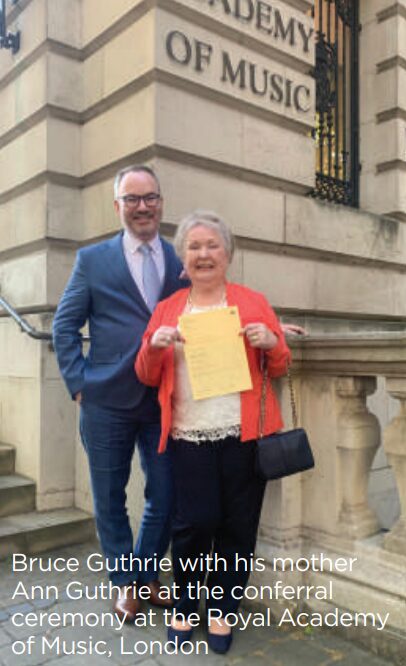
Every year, the academy honours individuals whose work has made an exceptional impact on music and the performing arts. Bruce Guthrie, Head of Theatre and Films at the NCPA, was conferred the Honorary Associateship of the Royal Academy of Music (Hon ARAM) this April. It is a distinction reserved for individuals outside the academy’s alumni who have made significant contributions to the institution and the wider cultural landscape, whether as professional practitioners, artistic leaders, educators, producers or advocates for the arts.
For his remarkable work in international musical theatre and live performance, Guthrie joins an esteemed roster of past Hon ARAM recipients that includes noted lyricist and librettist Richard Stilgoe, composer and jazz musician Jim Hart and pioneering voice educator Jo Estill. Daniel Bowling, the Gatsby Chair of Musical Theatre at the Royal Academy of Music, and music supervisor, conductor, music director and author, says, “Through his innovative direction and production work across theatre and concert performance, Bruce has played a significant role in expanding the reach and artistic ambition of contemporary musical theatre, while also fostering important
collaborations between artistes and institutions internationally”.
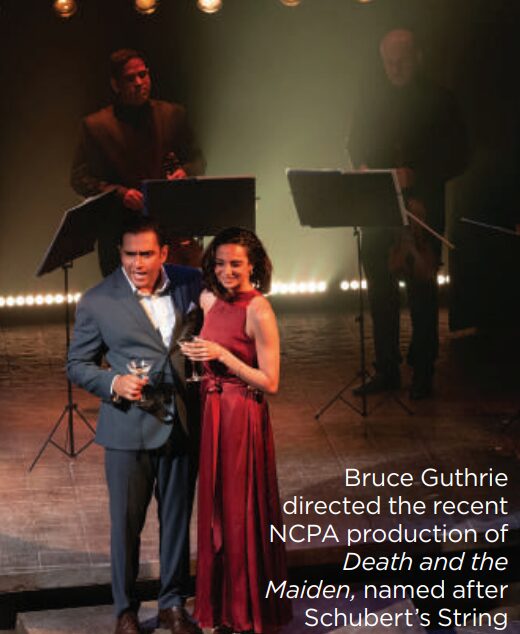
The recognition also reflects Guthrie’s longstanding association with RAM’s renowned Musical Theatre programme for which he has directed shows such as Assassins, Into the Woods, Merrily We Roll Along, Carousel and City of Angels, to name a few. This summer, he will direct the beloved musical Chess by Benny Andersson and Björn Ulvaeus (of ABBA), with lyrics by Tim Rice. Back home at the NCPA, Guthrie has brought to life ambitious theatrical productions such as Tom Stoppard’s Every Good Boy Deserves Favour, and more recently, Ariel Dorfman’s Death and the Maiden. Both productions uniquely integrated musicians of the Symphony Orchestra of India into the dramatic fabric of the plays, making music an essential presence within the storytelling itself.
This article is written By Aishwarya Bodke and appeared in the June 2026 issue of NCPA’s On Stage magazine