If you’ve ever sat in a theatre and felt your breath change without knowing why, a room suddenly colder, a moment heavier, a memory warmer, chances are, a lighting designer was quietly pulling emotional strings.
For Yael Crishna, lighting isn’t about flashy beams or tech flex. It’s about world-building you don’t notice until it’s missing. Her journey into the craft started not with equipment lists, but with awe watching “magical worlds being created” from the audience long before she was shaping them herself. That fascination led her to drama school in Australia, where lighting (and sound) became not only her core but her favourite subjects.
There Are No Shortcuts; Only Floors to Sweep

Yael’s entry into theatre wasn’t glamorous. Fresh out of boarding school and back in Bombay, she found her way into a rehearsal room through a former teacher, and simply being in that space became the foundation of her career.
Her advice to newcomers is just as grounded, “There are no stupid questions. Be early, because on time is late, and being late is unforgivable. And remember, there is no ‘I’ in the team.” It’s clear, unsentimental, and rooted in the realities of how theatre actually works.
It’s less “follow your dreams” and more “earn your place.” And that’s the reality of technical theatre. You start at the bottom. You observe. You listen. You learn how every department breathes together.
The industry has shifted, though. Directors are increasingly involving designers earlier, production management is more structured, and creative departments are treated as collaborators, not last-minute problem solvers. That means young lighting practitioners today aren’t just pushing faders, they’re part of storytelling conversations from the start. But the entry point hasn’t changed: humility first, ambition second.
Lighting Is Technical, But That’s Not the Point
When the conversation turns to color temperature, beam angles, or fixture placement, Yael gently pulls it back to something simpler. “If I get too wrapped up in the technicalities, it takes away from my ability to be creative. The technical elements are tools, very important tools, but still just tools.”
For her, the starting point isn’t the rig, it’s the feeling. “I first need to know the effect or look I want. What should this moment feel like? Then I will find a way to make it happen.” That order matters. Especially for young designers who often feel pressure to “know all the gear.” The knowledge is essential, she says, but it comes into play after the storytelling instinct. And even then, it’s a process of adjustment. “Sometimes it doesn’t work on the first go in the theatre. You have to tweak it on the ground.”
Designing With Reality, Not Just Vision
This approach becomes even more important when real-world limitations kick in, budgets, venues, and existing equipment.
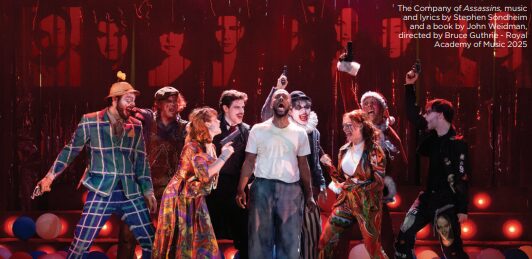
Yael recalls working on a 2025 production that moved across three different venues, each with very different in-house lighting setups. Hiring an entirely new rig for each space simply wasn’t feasible.
The process began in rehearsal rooms, in conversation with the creative team, and with a clear understanding of what each venue could provide. Instead of designing one fixed plan, the focus shifted to identifying what was essential and what could adapt. Flexibility wasn’t a compromise, it was the design strategy.
For emerging designers, this is one of the biggest lessons: you’re not designing in a vacuum. You’re designing for the venue, the budget, the touring schedule, the available crew, and the clock. The artistry lies in making all of that feel seamless to the audience.
Caffeine, Paperwork, and Controlled Chaos
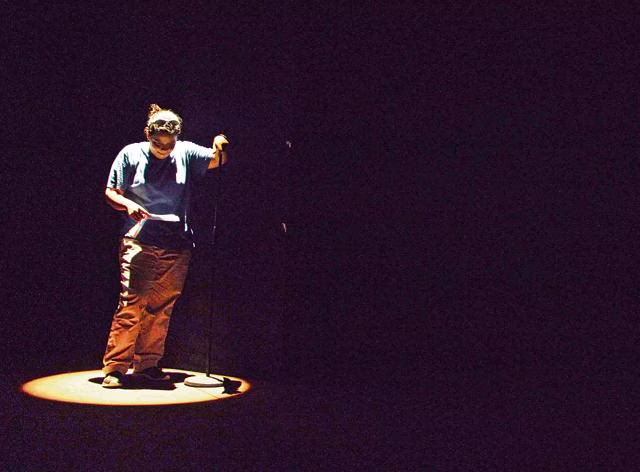
Forget the romantic idea of artistic flow. Show days are long, logistical marathons “fuelled by caffeine.” Efficiency matters, not just for speed, but to create a safe environment for other departments to work. Lighting doesn’t exist in isolation; it shares space with sets, costumes, performers, and crew.
Her non-negotiables say everything about professional survival in live performance:
- No flying on show or setup days (too many variables).
- Sleep is essential, technicians are performers too.
- Organized paperwork: light plans, marked scripts, prep done in advance.
The thumb rule is that, in theatre, chaos is guaranteed. Preparation is how you wrestle back control.
The Real Challenges Aren’t Always Technical
While equipment and programming matter, the most consistent pressure point is time. Many productions enter the theatre and open to paying audiences almost immediately. Technical rehearsals get compressed, leaving little room for exploration. Ideas that felt secure on paper must work quickly, safely, and under scrutiny. The process becomes less about perfecting and more about prioritising.
There are also challenges that extend beyond design. As someone who often works with women leading technical departments, Yael notes that resistance from crews unaccustomed to taking instruction from women is still a reality. The job can involve navigating working cultures that haven’t evolved as quickly as the tools themselves.

So You Want to Do This?
The advice she offers isn’t dramatic. Observe the room. Stay open. Learning often comes from unexpected places, a rehearsal adjustment, a technical workaround, a quiet moment of problem-solving. And practically? Be ready for long hours on your feet.
Lighting design lives at the intersection of creativity, logistics, and endurance. The audience may only see the final glow, but behind it is patience, adaptability, and work done long before the lights come up.
Because when lighting works perfectly, it disappears, and all that remains is the story.
AOTP continues to spotlight the voices shaping performance from behind the scenes, because every story on stage begins with the people who build it. Follow the journey, discover the craft, and meet the makers redefining live arts today.