This article is reproduced from NCPA ON Stage and documents a conversation hosted by Art of the Possible (AOTP) at the Serendipity Arts Festival 2025. The session explored what truly goes into building a successful live production, from technical planning and stage engineering to collaboration, negotiation, and safety.
Featuring Bruce Guthrie, Head of Theatre & Films at the NCPA and Head of AOTP, in conversation with Mark Dakin, Principal at TAIT (UK), the discussion offered practitioners insight into the realities of production across scales, from intimate theatre to global stadium spectacles.
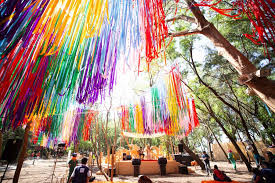
In the heart of Panaji, the Serendipity Arts Festival (SAF) has unfolded year after year, transforming the city every December into a meeting ground for visual, performing and culinary arts, alongside literature and critical discourse. The year 2025 marked a mighty milestone of 10 fruitful editions of the SAF. The festival reunited with all its past curators to shape a thoughtfully collaborative programme, where exhibitions spilled into performances, heritage walks aligned with culinary workshops and multiple art forms coalesced to create immersive, cross-disciplinary experiences.
This year, a talk hosted by the ON Stage magazine and Art of the Possible, a theatre development programme by the NCPA, offered a rare window into the oft-unseen world behind live performance. The conversation brought together Bruce Guthrie, Head of Theatre & Films at the NCPA and Head of Art of the Possible (AOTP), and Mark Dakin, Principal at TAIT (UK), a pioneering force in stage engineering and technology. What followed was a deep inquiry into how shows are built, troubleshot and ultimately brought alive on stage.
Guthrie and Dakin, with their extensive work in theatre and large-scale live events, mapped the production landscape from intimate theatre to stadium spectacles. Dakin recounted his early days loading production gear into vans and cutting his teeth at London’s Young Vic, before going on to work as Technical Director at prestigious institutions including the Royal Opera House and the National Theatre in London.
Both speakers reinforced the idea that storytelling is not a craft that thrives in silos — that collaboration is as essential to great work as creativity.
A subject that inevitably came up in the session was the constant tussle between artistic aspiration and material limits. The panellists emphasised that budgets, timelines and workforce are not obstacles to ambition but parameters within which artistes, production teams and directors must find the perfect balance. Dakin distilled this into a familiar production maxim: “You can have two out of three — time, people, money.” Successful productions require negotiation.

“You have to understand the space you’re working in and the relationship all departments [involved] have with it. An idea can be wonderful and still wrong for a particular show, so learn when to let it go. Know when to kill your darlings,” said Guthrie on the need to take a dispassionate view of a work in progress.
Examples drawn from TAIT’s body of work added moments etched into global pop culture memory to the discussion. Productions on that scale cannot afford mistakes which would unfold in front of millions. Rihanna’s memorable Super Bowl halftime performance had her suspended on moving platforms high above a stadium. Sketches made weeks before the event had to be translated into structures that were not only visually outstanding but also safe. What audiences experience as effortless spectacle is, in reality, the result of decades of incremental innovation. It all comes down to trust, safety and expertise.
Responding to questions from a room full of emerging artistes, students and production managers, the speakers offered candid advice on navigating early career challenges, highlighting the significance of relationship-building and being open about limitations.
Amid the pulsating diversity and scale of the 10th edition of the SAF, the conversation served as a reminder of art not only being what we witness onstage, but also what we make possible together.
This article is written By Aishwarya Bodke