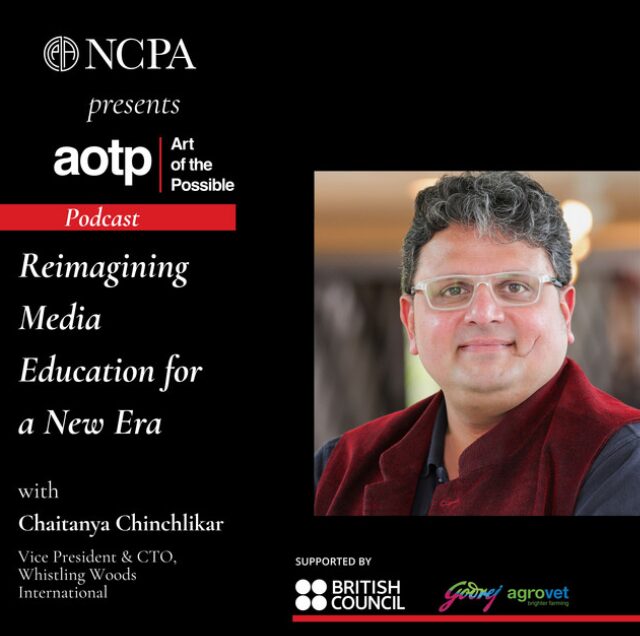
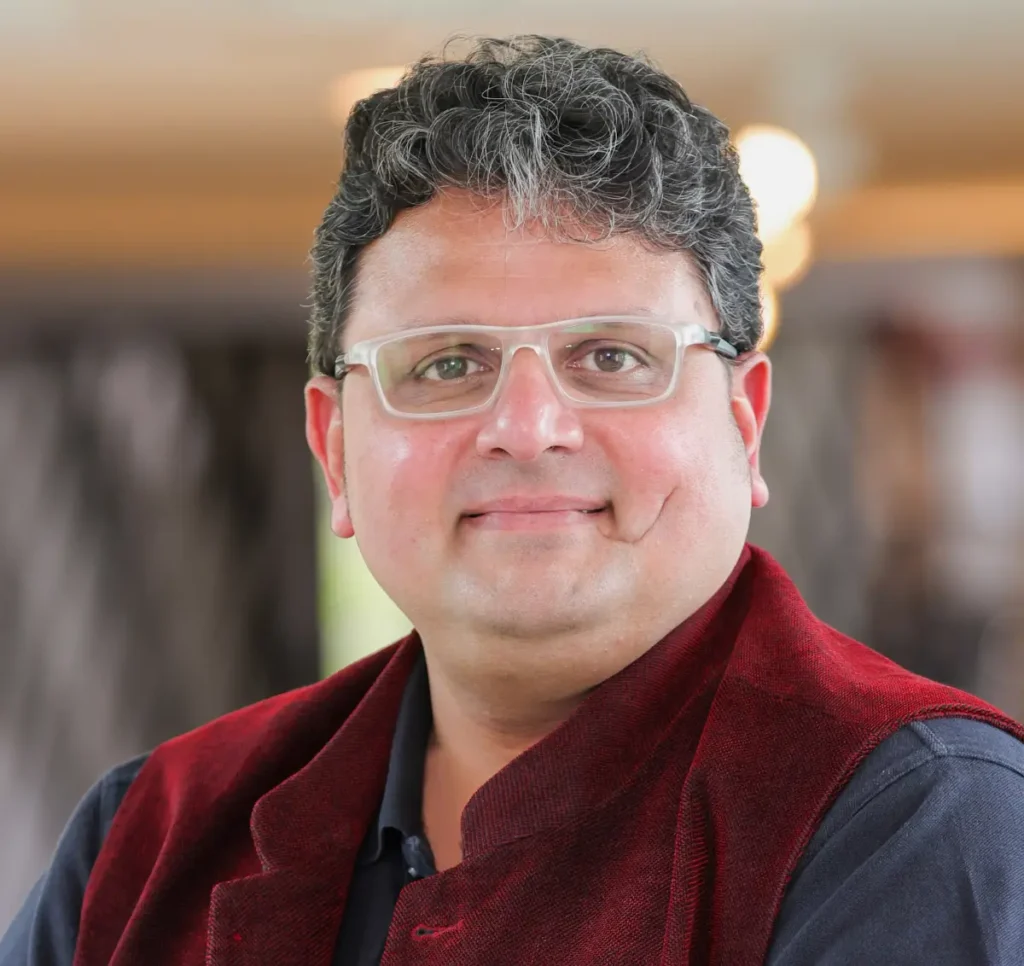
In the latest episode of the AOTP Podcast, Chaitanya Chinchalikar, Vice President and Business Head, Chief Technology Officer at Whistling Woods International, discusses how technology is transforming creative education and why preparing students for the future means teaching them skills for industries that don’t yet exist. From virtual production and immersive media to public policy and theatre education, Chaitanya offers a forward-looking perspective on where the creative industries are headed.
Teaching for a Future That Doesn’t Exist Yet
As the Chief Technology Officer at Whistling Woods International, Chaitanya’s role extends far beyond introducing new technology into the classroom. His responsibility is to anticipate where the industry is heading years before students graduate. “We’re trying to teach students to work in careers that may not be invented using technologies that have not been invented to solve problems that are not yet known.”
With technology evolving at an unprecedented pace, educators can no longer build curriculums around today’s industry. Instead, they must prepare students for the industry of tomorrow. “In 2025, I need to know what the industry is going to be technologically in 2028 or 2029.” For Chaitanya, education is no longer reactive. It has to be predictive.
Technology is Expanding Creative Possibilities
The conversation explores how emerging technologies such as virtual production, virtual reality, motion capture and artificial intelligence are reshaping storytelling across every creative discipline. “As content platforms evolve, content evolves.” What began with cinema, television and the internet has now expanded into immersive media. These technologies are no longer niche tools reserved for Hollywood productions. They are becoming an essential part of filmmaking, theatre and live experiences alike. “As a cinematographer, you need to learn real lighting. You also need to learn virtual lighting.”
Rather than replacing traditional craft, technology is adding another layer to it. Today’s creative professionals are expected to understand both physical and digital production environments.
What This Means for Theatre
Although his work is rooted in film education, Chaitanya believes these technologies have enormous potential for live performance. Projection mapping, LED walls, digital sets and immersive visuals are already changing the way stories are told on stage.
“If you want to give people a well-rounded modern experience, you have to make sure that at least those skills are transferred to the theatre creators of today.” Beyond enhancing audience experiences, these tools also make production more efficient by simplifying complex design and technical processes. For Chaitanya, technology should never replace creativity. It should simply give artists more ways to express it.
Building Stronger Creative Education
The conversation also turns to the gap between private education and public investment in the creative industries. Chaitanya acknowledges that institutions like Whistling Woods are able to move quickly because they can invest heavily in infrastructure. At the same time, he believes government support will naturally grow as creative industries continue to demonstrate their economic value. “As the industry starts to see success, the government will back it.”
India’s rapid growth in animation, visual effects, gaming and immersive media has already led to new policy initiatives and investment in creative education. He believes theatre deserves similar attention. “There is enough raw material and enough of a talent base now that you can actually set up a Centre of Excellence for Theatre Arts.” Such a centre, he argues, should go beyond acting to include lighting, sound, production, stage technology and every discipline that contributes to live performance.
Why Industry Conversations Matter
When discussing AOTP, Chaitanya highlights the value of connecting students directly with experienced professionals. “Any conversation that any student can have with any practitioner only adds value.” Students often hear similar advice from teachers throughout their education, but hearing those same ideas from working professionals gives them greater credibility and context. “When multiple people say the same thing, it sits deeper with the students.” For Chaitanya, platforms like AOTP create opportunities for these conversations to happen regularly, allowing students to better understand industry expectations while learning from practitioners actively shaping the field.
Beyond a Directory
While AOTP includes a directory for industry professionals, Chaitanya believes its greatest contribution lies elsewhere. “You cannot teach experience. You can only gain experience as you live.” What truly matters, he says, is the transfer of institutional knowledge. Generations of theatre professionals have accumulated decades of experience, lessons and problem-solving approaches that cannot be found in textbooks. Platforms like AOTP provide a way for that knowledge to be shared with emerging professionals before they begin building their own careers.
“The best way they’re able to take that and dissipate it to each forthcoming generation, that’s the big value.” For Chaitanya, this ongoing exchange between experienced practitioners and young professionals is what strengthens an industry over time.
Preparing Creative Professionals for What’s Next
Throughout the conversation, Chaitanya makes one thing clear: the future of creative education is not simply about keeping pace with technology. It is about preparing students to adapt to change itself. As storytelling continues to evolve across platforms, industries and technologies, the most valuable skill any creative professional can develop is the ability to keep learning.
For institutions like Whistling Woods and initiatives like AOTP, the goal is not only to teach technical skills but also to build a culture where knowledge, experience and innovation continue to be shared across generations.
If you enjoyed this conversation, you can listen to the full podcast episode with Mark Dakin on the AOTP Podcast. Subscribe, rate, and share the episode, and to learn more, visit aotp.in/.
Art of the Possible is supported by the British Council and Godrej Agrovet.