Art of the Possible (AOTP) is a development program launched by the National Centre for the Performing Arts (NCPA), Mumbai, for technicians, designers, managers and the workforce that makes all the magic happen backstage. It is a free community-driven resource for professionals in the performing arts and live events industry.
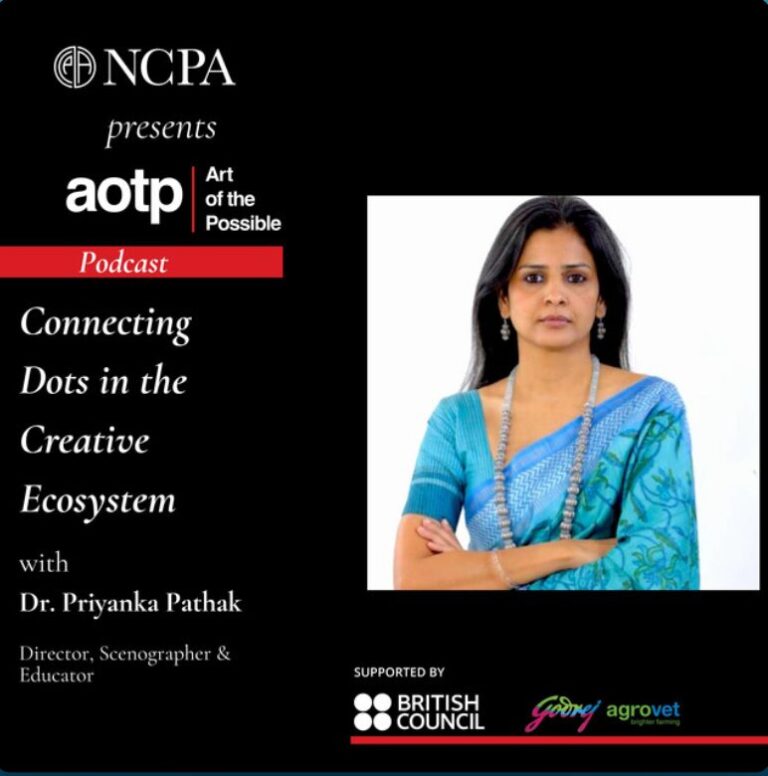
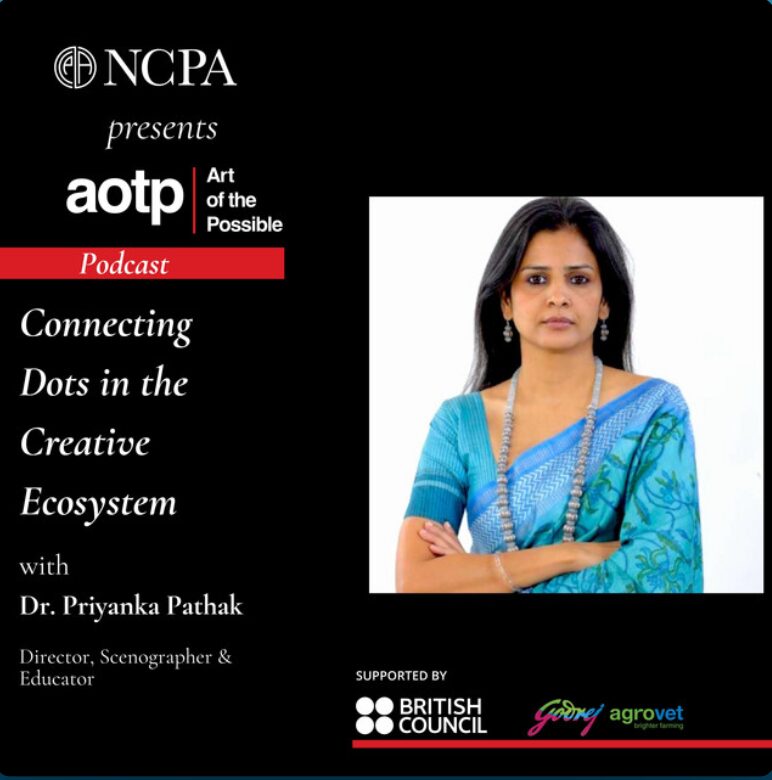
In the latest episode of the AOTP Podcast, we speak with Dr. Priyanka Pathak, theatre director, scenographer and performance studies scholar. Trained at the National School of Drama and recently completing her PhD at Jawaharlal Nehru University, Dr. Pathak brings together the worlds of theatre practice, research and education. Her work explores performance, cities and the ways in which people experience space. But at the heart of this conversation is a simpler question: how do people really learn?
Learning on the Job Starts in the Classroom
For many people working in the performing arts, learning on the job is often seen as an alternative to formal education. Dr. Pathak challenges that idea.
“Even the drama school learning is modelled on the similar idea that you learn on the job.”
What formal training offers, she explains, is structure. At the National School of Drama, students are not simply studying theory. They are constantly creating, collaborating and solving problems through practice. The difference is that the learning process is carefully designed.
“We have to do one Shakespeare, we have to do one Indian folk engagement and then we have to work with a contemporary director.”
This exposure to different forms, traditions and methodologies creates a learning curve that is intentionally built into the curriculum. Students are given opportunities to experiment, make mistakes and develop skills before entering the professional world.
When Learning Meets Reality
The transition from education to professional practice introduces a different set of pressures.
“The learning doesn’t stop in the institution.”
After graduation, Dr. Pathak continued to learn through freelance projects and collaborations. But unlike an educational setting, professional environments are focused on delivering outcomes rather than facilitating learning.
“When I also freelanced, I learnt a lot, but it’s a different kind of learning.”
In the performing arts, every production comes with its own challenges. Deadlines, budgets, changing circumstances and creative decisions all demand constant adaptation.
“You’re mostly doing creative thinking plus crisis management.”
For Dr. Pathak, that balance between creativity and problem-solving is one of the defining characteristics of working in live performance. It is also why practical experience remains such an important part of professional development.
Why Conversations Like AOTP Matter
One of the reasons Dr. Pathak sees value in AOTP is because it creates a space for reflection.
“I think it’s a great platform, not only for learners, but also for educators.”
The performing arts industry often moves quickly from one production to the next. Opportunities to pause, evaluate and discuss what is working are rare. Platforms like AOTP allow educators, practitioners and industry professionals to exchange experiences and think collectively about the future of training.
She believes these conversations can play an important role in shaping arts education in India.
“I genuinely believe that it will gather all the thoughts and come with new ideas in the art pedagogy.”
For Dr. Pathak, the future of training lies not only in teaching skills, but also in creating spaces where people can share knowledge, question existing systems and imagine new approaches.
What Young Professionals Need Today
When asked what students and emerging practitioners need most, Dr. Pathak’s answer is strikingly human.
“Compassion and empathy.”
While conversations around technology, careers and professional growth often dominate the sector, she believes young people are also dealing with immense pressure to keep up with the pace of the world around them.
“We as new learners will have to be a little more patient with ourselves.”
The expectation to constantly acquire new skills and stay ahead can sometimes overshadow the learning process itself. According to Dr. Pathak, growth requires commitment, curiosity and the willingness to give yourself time.
“Learning has its own curve.”
Rethinking Patience
Perhaps the most memorable moment in the conversation comes when Dr. Pathak reflects on the meaning of patience.
In industries driven by deadlines and constant movement, patience is often misunderstood as waiting. She offers a different perspective.
“Patience is not about waiting.”
Instead, she describes it as a practice of reflection.
“Give yourself a pause, a moment of pause to reflect upon what have you learned today.”
For Dr. Pathak, learning is not just about collecting experiences. It is about making sense of them. Reflection allows practitioners to understand their growth, recognise their challenges and remain connected to why they chose this work in the first place.
“Patience is also that moment of pause of reflection.”
In a profession that rarely slows down, that pause may be one of the most valuable skills a person can develop.
Learning for the Long Run
Throughout the conversation, Dr. Pathak returns to the idea that learning is never finished. Whether in a classroom, a rehearsal room or a production environment, growth happens gradually through practice, reflection and experience.
As the performing arts industry continues to evolve, her perspective serves as a reminder that technical skills alone are not enough. Curiosity, resilience, empathy and the ability to keep learning may ultimately be what sustains a long and meaningful creative career.