We seldom realise the importance of lighting design. Like life, it is often noticed only when it fails; when it works, it disappears into the experience. It is a profession shaped as much by circumstance as by intention, and Arghya Lahiri’s practice has followed that trajectory closely.

Theatre was already part of Arghya Lahiri’s world long before he knew what a lighting designer was. His parents, Bengali and deeply involved in theatre at an amateur level, took him to live shows regularly. Watching performances wasn’t an event; it was a habit. Somewhere between those early evenings in auditoriums and the backstage spaces that followed, a familiarity with live performance took root.
That familiarity turned practical early. At twelve, Arghya was operating a follow spot at school in Nairobi. A year later, he was lighting a full-length production of The Sound of Music using a homemade switchboard, all plugs, regulators, and no safety net. This was 1993. Shows were saved onto floppy disks. Nothing was intuitive. Everything required attention.
“I’m not going to say it sparked an interest in the arts forever,” he says. “But there was a connection.”
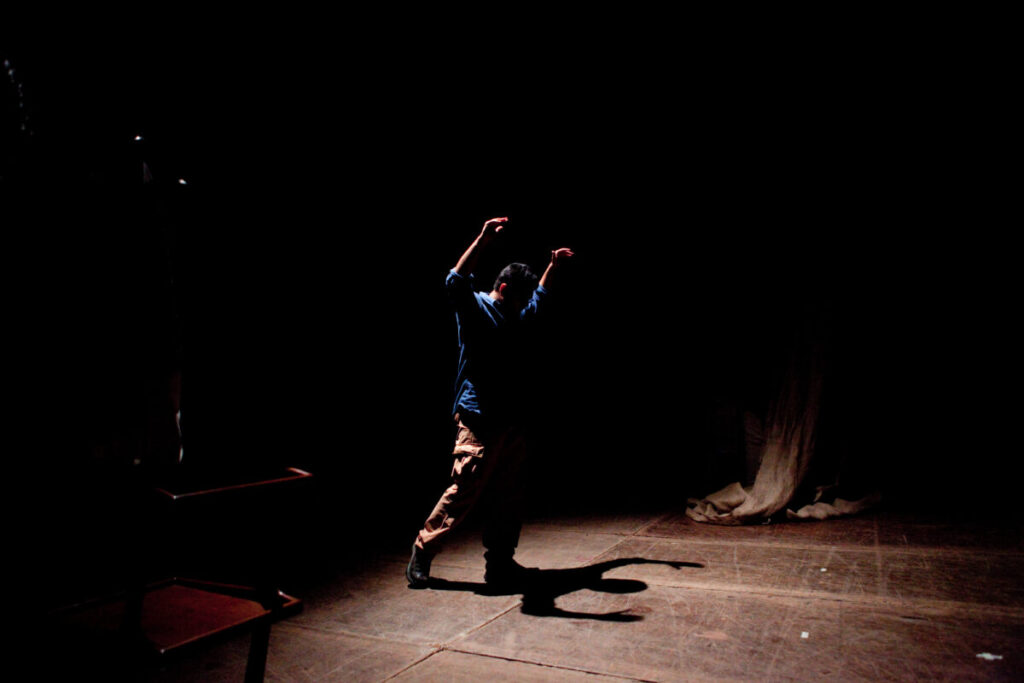
That connection resurfaced years later in Mumbai, unexpectedly and viscerally. While focusing lights one evening at St. Xavier’s College, Arghya caught the smell of hot lamps in a closed room. “It was a sense of homecoming because it’s exactly the smell as when I used to operate the follow spots,” he recalls.
He didn’t arrive at lighting design through ambition. In college, he acted, assisted, and hovered. He showed up early, stayed back late, and helped wherever he could. “I just wanted to be around,” he says. “Around the theatre, around the play, around those people.”
His first lighting credit came almost incidentally. He knew slightly more than everyone else, which, at twenty, was enough. As student productions edged toward professional work, Arghya became the lighting designer because someone had to be. Circumstance did the rest.
Looking back, he’s clear about what would have helped: more hands-on experience with electricity, a deeper understanding of how venues function, earlier exposure to offline programming and intelligent fixtures, and more work across Indian languages. These aren’t regrets so much as notes to self, the kind that only surface after years of working under pressure.
Arghya’s approach to lighting is grounded in limits rather than fantasy. “The budget comes first. Time follows closely”. Everything else, fixtures, colour, ambition, is negotiated within those boundaries.
“I’d like the earth,” he says. “But can we afford it? And even if we can, do we have the time to do it justice?”
Genre, he insists, is secondary. Dance and musical theatre carry expectations, but expectations don’t override infrastructure. Lighting choices are shaped less by style and more by what a space can realistically hold.
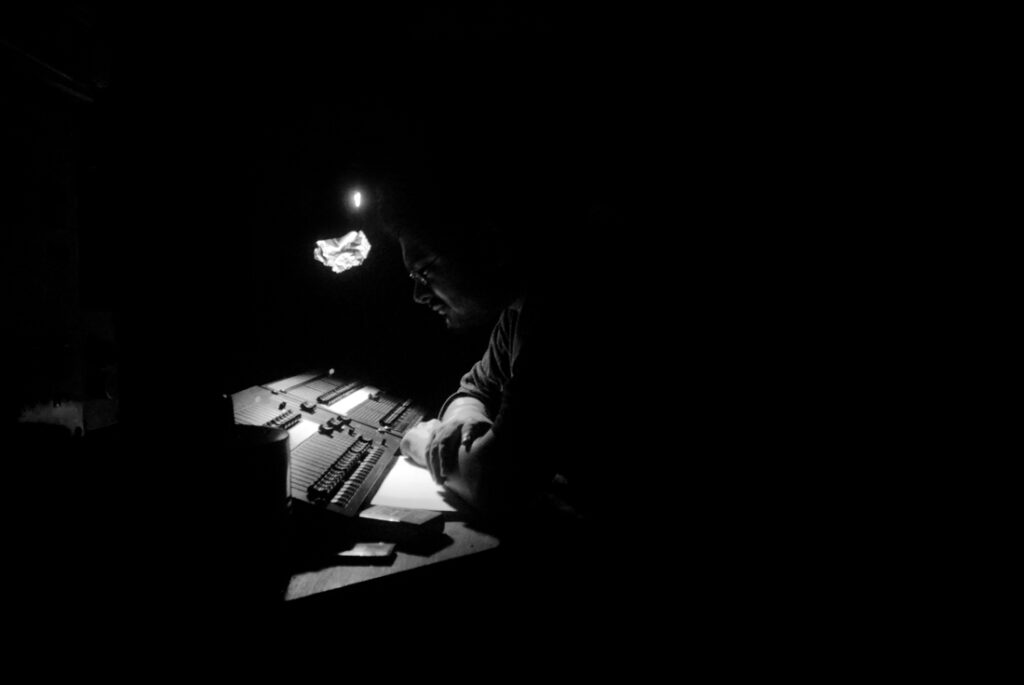
For Arghya, lighting works best when it suggests rather than describes. It isn’t about recreating reality but about shaping an impression, a shift in temperature, a contraction of space, a change in rhythm that signals something has altered.
“The structure of the plan remains the same,” he says. “The materials change.”
In Indian theatre, ideal working conditions are rare. Load-in, rehearsal, and performance often collapse into a single day. You rig, focus, program, run a tech, grab food, and open the house. If you’re lucky, this process stretches out. If not, you adapt.
Dark time matters. Silence helps. Safety is non-negotiable, even if it’s constantly under threat. Breaks. Bathrooms. These are essentials, not indulgences.
And then there is the reality of live performance. Power cuts. Blown lamps. Injured actors. Failing sound systems. Disruptive audiences. Fires. Riots. Shows finished in working light and candlelight. Animals wandering onstage.
“It’s live,” Arghya says. “Anything can happen.”
Technology, he notes, has altered the landscape unevenly. LEDs have become standard. Much else remains out of reach. What has truly shifted his workflow is offline programming, particularly in recent collaborations with Yael Crishna. Building a show away from the venue allows rehearsals to begin sooner and decisions to be tested before pressure peaks.
It demands more preparation, but it buys time where it matters most.
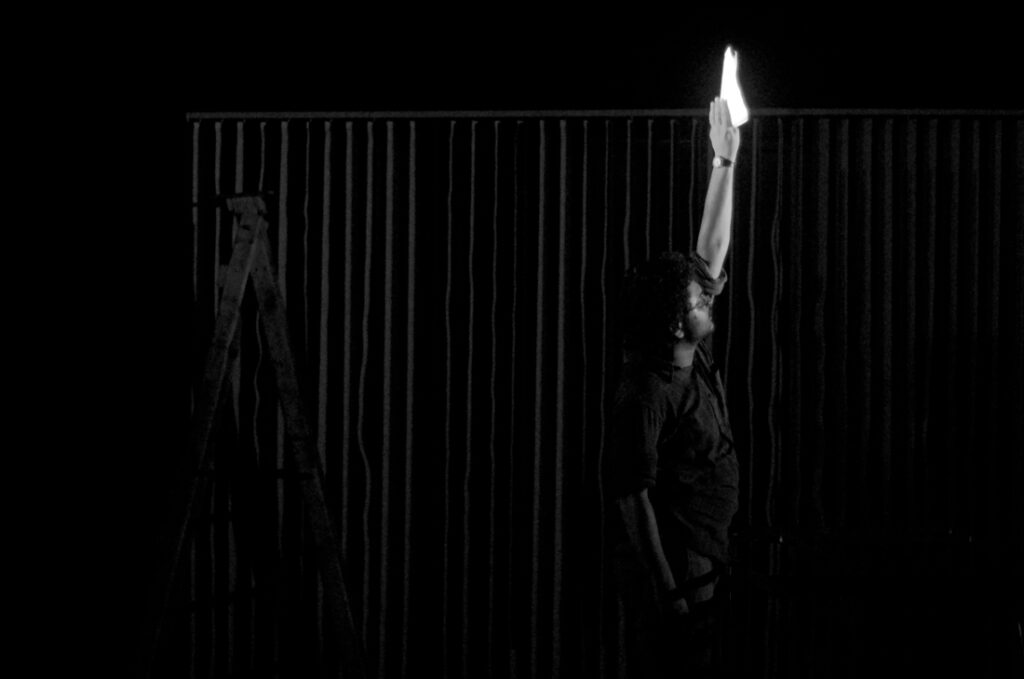
Asked what advice he’d offer someone starting out now, Arghya is characteristically unsentimental. There is no formula. No shortcut. Lighting designers are rarely visible. Recognition is slow, if it arrives at all. Rigour matters, but so does perspective.
“No one else is responsible for the standards you choose to hold yourself to,” he says. “But before and after rehearsal, remember it’s just a show. There are more important things in the world.”
Still, there’s no mistaking the respect he holds for the work. Theatre is live, fleeting, and unrepeatable. To shape it, quietly, from the dark, remains a privilege.
And that, perhaps, is the art of the possible.
To read more such article click here